
£155,000 of funding generated for a UK multi-tenant business park
A multi-occupier estate of manufacturing, warehousing and offices needed a funded route from energy audit to action. Implementation is now under way.
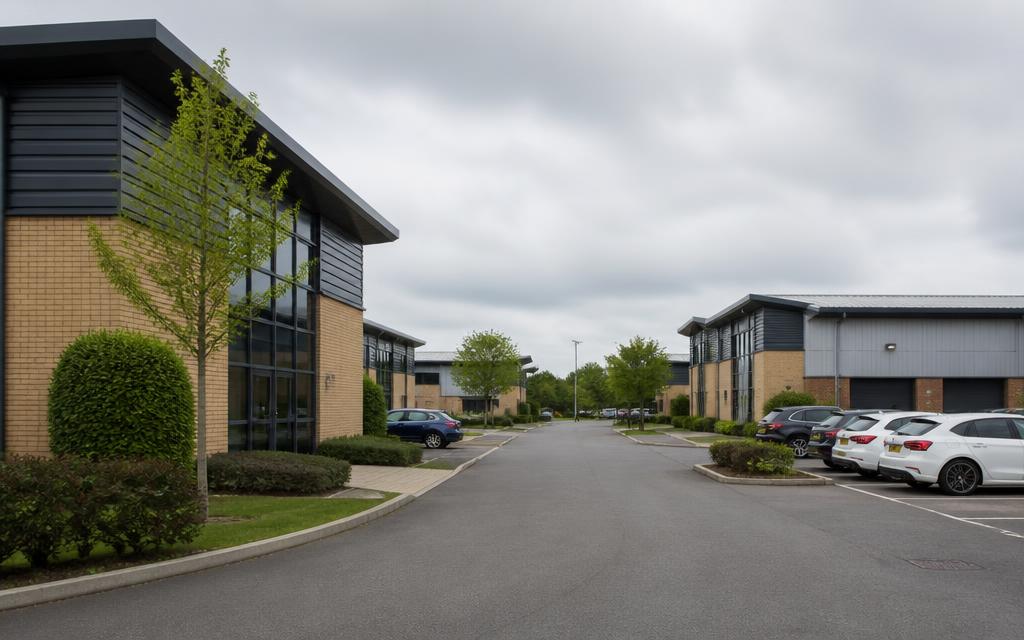
IEM 360 has generated £155,000 of funding to support improvements at a UK multi-tenant business park. With the energy audit complete, implementation is now under way.
The audit identified six core measures with the potential to reduce annual energy costs by approximately £97,000 — combining better energy management with targeted improvements to lighting, ventilation, heating controls and steam-system insulation.
- Sector
- Commercial Property & Industrial
- Services
- Funding · Energy Audit · Monitoring · Energy Efficiency
- Project status
- Audit complete · Implementation in progress
- Client
- Identity withheld
The challenge
The business park brings together manufacturing, warehousing and offices, with multiple occupiers and buildings of different ages. Annual electricity and gas consumption totalled approximately 6 million kWh, with a reported energy cost of around £520,000 for the audit's April 2025–March 2026 baseline. Although the estate had extensive submetering, the audit found that data was primarily being used for billing rather than detailed energy management. It also identified older fluorescent lighting, opportunities to optimise ventilation and heating controls, and exposed steam pipework and valves. The priority was to establish where improvements would make the greatest difference — and create a practical route to delivering them.
Our approach
- Generated £155,000 of funding to support the site's improvement programme
- Detailed energy audit of consumption data, equipment and operating practices
- Prioritised six core measures: energy policy and staff awareness, energy monitoring, air-handling controls, steam-system insulation, LED lighting, and heating controls
- Progressing implementation of the recommendations with monitoring to evidence impact
The outcome
- £97,036 in estimated annual savings across six core measures — ~19% of baseline energy costs
- 997,502 kWh of annual energy savings identified, ~17% of baseline consumption
- Combined estimated payback of 0.9 years against an estimated £89,000 investment
- Programme moving from assessment into delivery, with funding in place
The improvement programme
| Improvement | Recommended action | Estimated annual saving |
|---|---|---|
| Energy policy and staff awareness | Establish clear responsibilities, targets and staff engagement. | £15,608 |
| Energy monitoring | Use consumption data to identify waste, set targets and track performance. | £26,014 |
| Air-handling controls | Optimise supply-fan speed while maintaining required airflow. | £18,720 |
| Steam-system insulation | Insulate exposed pipework, valves and flanges. | £8,424 |
| LED lighting | Upgrade remaining older fluorescent fittings. | £24,490 |
| Heating controls and boiler review | Improve heating controls and assess older boilers for future replacement. | £3,780 |
| Total | Six core improvement measures | £97,036 |
Figures are the audit's estimates, not measured savings. The costed heating measure covers control improvements rather than a full boiler-replacement programme.
“More than identifying an opportunity — helping the customer act on it.”
Download the brochure
Read the full case study as a PDF
Share it with your team or keep it for your board pack — the complete story, offline.
Could your site tell a similar story?
Client identity withheld. Funding and implementation status are based on IEM 360's project update. Savings, investment costs and payback are estimates from the updated audit, not guaranteed or verified results. The audit notes potential overlap between measures and recommends validating equipment-level consumption before investment. Funding arrangements are project-specific.